Roof Repair in Annapolis, MD — Finding the Problem, Not Just the Symptom
Most homeowners call about a ceiling stain. But the stain isn't the leak — it's where the leak became visible. Effective roof repair in Annapolis starts with understanding how water moves through a roof system before it ever shows up inside your home.
Serving Annapolis, Eastport, Historic District, West Annapolis, Hillsmere Shores, Bay Ridge and Anne Arundel County · MHIC-licensed contractor connections
Why roof leaks are rarely where they appear
When water drips from your ceiling, the entry point in the roof can be anywhere from a few feet to 10–15 feet away. Water moves along the underside of the roof deck, follows rafters and framing downhill, and collects at a low point before it drips into the living space. That's why a patch directly above the stain often fails — you repaired the wrong location.
Proper leak diagnosis follows the water's path backward: starting in the attic to look for moisture trails, wet insulation, staining on the underside of the sheathing, and daylight through penetrations. From there, the contractor works outward to find where the water entered the roof system.
The most common roof repair types in Annapolis
After tracking repairs across Annapolis neighborhoods, these are the situations that come up most often:
1. Flashing failure at chimneys
This is the single most common repair on Annapolis homes — particularly the older brick colonial and Cape Cod styles common in neighborhoods like West Annapolis, Murray Hill, and downtown. Chimney flashing is a two-part system: step flashing that runs up alongside the chimney, and counter-flashing (or cap flashing) that is embedded into the brick mortar above it. When mortar joints age and crack, counter-flashing loosens, and when step flashing corrodes from salt air, the result is water running directly down the chimney-to-roof junction. The repair involves removing and resetting the counter-flashing, often re-pointing the mortar joint, and replacing any corroded step flashing sections.
2. Storm-lifted shingles
A nor'easter with 50–80 mph gusts can lift shingles that are perfectly fine the rest of the year. Shingles are most vulnerable in the first few rows above the eave (where wind uplift is strongest) and at the ridge. If fewer than a quarter of the total shingles are involved, individual shingle repair or spot replacement is the right call. If the pattern is widespread, it often means the roof is beyond its functional lifespan and replacement makes more sense economically.
3. Pipe boot failure
Every plumbing vent stack, exhaust vent, and utility penetration that exits through your roof has a "boot" — a rubber or metal collar that seals the gap between the pipe and the roof surface. Rubber boots crack and shrink with age, especially under UV exposure and temperature cycling. They're inexpensive to replace and account for a surprising number of "mysterious" leaks that seem unrelated to shingles or obvious damage.
4. Valley deterioration
Roof valleys — the V-shaped channels where two roof planes meet — concentrate runoff. When valley flashing or closed-cut shingles age, they become a primary leak location. On Annapolis colonial homes with multiple dormers or intersecting roof planes, there may be four or five valleys, each a potential failure point.
5. Ice dam damage (winter)
Annapolis winters aren't as severe as inland Maryland, but freeze-thaw cycles still create ice dams along eaves — particularly on homes with inadequate attic insulation or ventilation. When ice forms, backs up, and melts, water gets under the shingles. Proper ice and water shield installation during any roof work on Annapolis homes is essential.
Learn about Historic District roofing →
How to read the signs before calling anyone
You don't need to get on the roof. Here's what to look for from safe ground-level observation:
- Dark streaking or missing areas on the roof surface (missing shingles, exposed underlayment)
- Shingles curled, cupped or showing edges that have lifted away from the layer below
- Gutters full of granules — grayish-black grit that looks like sand
- Visible daylight around chimney base or where chimney meets roof slope
- Damp or stained spots in the attic after rain
- Interior ceiling stains that grow after rain but dry out between storms
- Sagging sections in the roofline viewed from the side
Repair vs. replacement — knowing the difference
Not every leak means a new roof. And not every old roof should be repaired. Here's how the decision generally breaks down:
Repair makes sense when:
- Damage is isolated to one area (one slope, one penetration)
- The rest of the roof is in good condition
- The roof is under 15 years old
- The failure is a specific component (flashing, boot, a few shingles)
- You need to sell the home and want a documented repair
Replacement makes sense when:
- More than 25% of the surface is damaged (the "25% rule")
- Multiple areas are failing simultaneously
- The roof is 20+ years old (especially with Chesapeake salt air)
- Underlayment is saturated or decking is rotted
- You've repaired the same area more than twice
The repair process — what to expect
- Inspection and diagnosis A thorough inspection goes into the attic first, then to the roof surface. Many contractors now use drone photography to document every section with timestamped images — useful for both scoping the repair and insurance purposes.
- Written scope of work Before any work begins, you should receive a written description of exactly what will be repaired, what materials will be used (with product names, not just "shingles"), and the total cost. In Maryland, written contracts are required for work over $1,000.
- Permit (if required) For full roof replacements in the City of Annapolis, a building permit is required. Your contractor should pull this permit — not you. Historic District properties need the COA first.
- Material delivery and setup Most repairs are done in a single day once materials arrive. Larger projects may take two days. Debris collection nets or tarps should protect your landscaping.
- Repair and quality check After the repair, a good contractor does a final walkthrough — and many use a magnet sweep of the yard to collect any fallen fasteners, which matters especially if you have kids or pets.
- Documentation You should receive a summary of what was done, photos, warranty documentation, and permit sign-off if applicable. Keep these for your home records.
What a roof repair costs in Annapolis
Annapolis pricing runs slightly higher than the broader Maryland average, primarily due to property complexity (older homes, steep pitches, multiple dormers), Historic District requirements, and the extra corrosion protection needed for coastal exposure.
General ranges for common repairs in Anne Arundel County:
- Pipe boot replacement: $200–$450 per boot
- Shingle section repair (1–2 squares): $350–$800
- Chimney flashing repair: $450–$1,600 depending on chimney size and flashing condition
- Valley repair or replacement: $400–$1,200
- Emergency tarping: $250–$600
- Full roof replacement (average Annapolis home): $14,000–$32,000+
These are general ranges based on typical Anne Arundel County project data. Actual costs depend on roof size, pitch, material, access, and specific conditions found during inspection.
Get a Roof Assessment
Describe what you're seeing and where you're located. We'll help you understand what type of repair you likely need.
Start Assessment → Call (410) 883-1701Common situations we help with:
- Ceiling stain after rain
- Visible missing shingles
- Storm damage assessment
- Post-inspection repair quotes
- Historic District HPC guidance
- Repair vs. replace decision
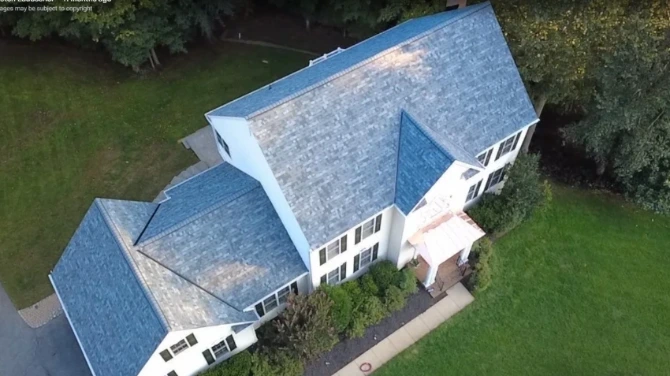
Active roof replacement on a brick colonial in Anne Arundel County — this housing style is common in Annapolis neighborhoods.
Roof repair questions, answered
What is the most common cause of roof leaks in Annapolis?
Flashing failure — particularly at chimneys — is the most common cause on Annapolis homes. The brick-to-roof junction on older colonial and Cape Cod homes creates an inherently vulnerable seam. Salt air from the Chesapeake Bay accelerates metal corrosion, and older homes often have original flashing that's well past its useful life. The second most common cause is wind-lifted shingles after nor'easter events.
Do I need a permit for roof repair in Annapolis?
In the City of Annapolis, full roof replacement requires a building permit. Minor repairs — replacing a few shingles or patching flashing — typically don't require a permit, but this depends on scope. Your contractor should determine this based on what the job involves. For Historic District properties, a Certificate of Appropriateness from the HPC must be obtained before any permit application for exterior changes.
How do I know if I need a repair or full replacement?
Roofers generally use a 25% threshold: if more than a quarter of the surface area is damaged or compromised, replacement is usually more cost-effective. Other indicators for replacement: the roof is over 20 years old, underlayment is saturated, or you've had leaks in multiple locations. Localized storm damage, a single failed flashing, or a few lifted shingles are typically good candidates for repair.
How long does a typical roof repair take in Annapolis?
Most repairs — flashing work, shingle sections, pipe boots — are completed in a single day once materials are on site. Emergency tarping can be done within hours. Full roof replacements on a typical Annapolis single-family home usually take one full day, sometimes two for larger or more complex roofs. Historic District properties may have longer lead times due to the COA review process.
What is the 25% rule in roofing?
The 25% rule is a threshold many roofing professionals use when advising on repair versus replacement. If more than 25% of the total roof surface area requires repair or replacement, the cost and disruption of doing it in sections often exceeds the cost of doing the whole roof at once — and you also avoid the visual mismatch of new shingles next to aged ones. Additionally, some building codes limit re-roofing over existing layers when damage exceeds a certain percentage.
Ready to figure out what your roof actually needs?
Describe what you're seeing, the neighborhood, and whether it's urgent. We'll connect you with a licensed Annapolis roofer appropriate for the specific type of repair.